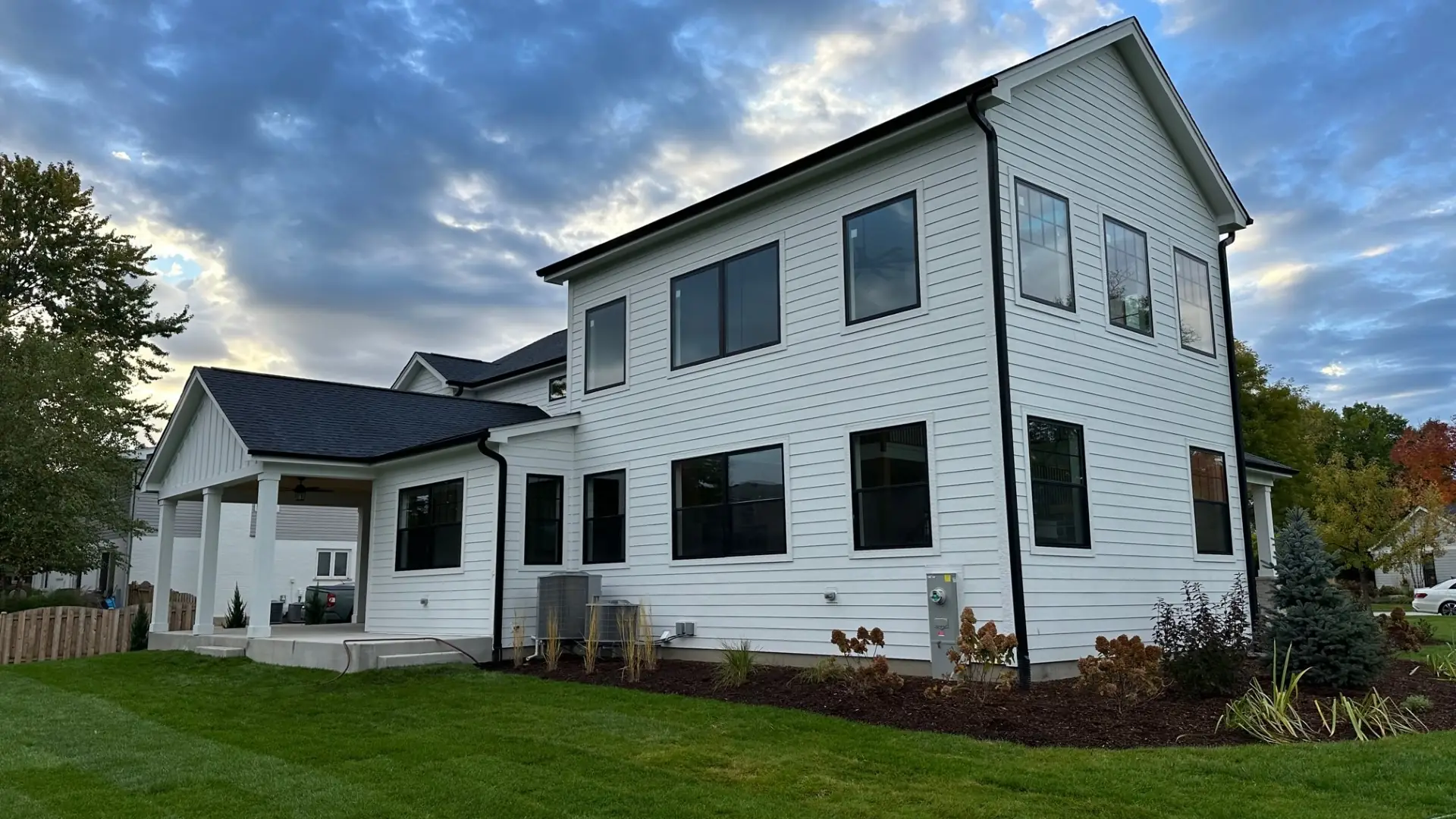
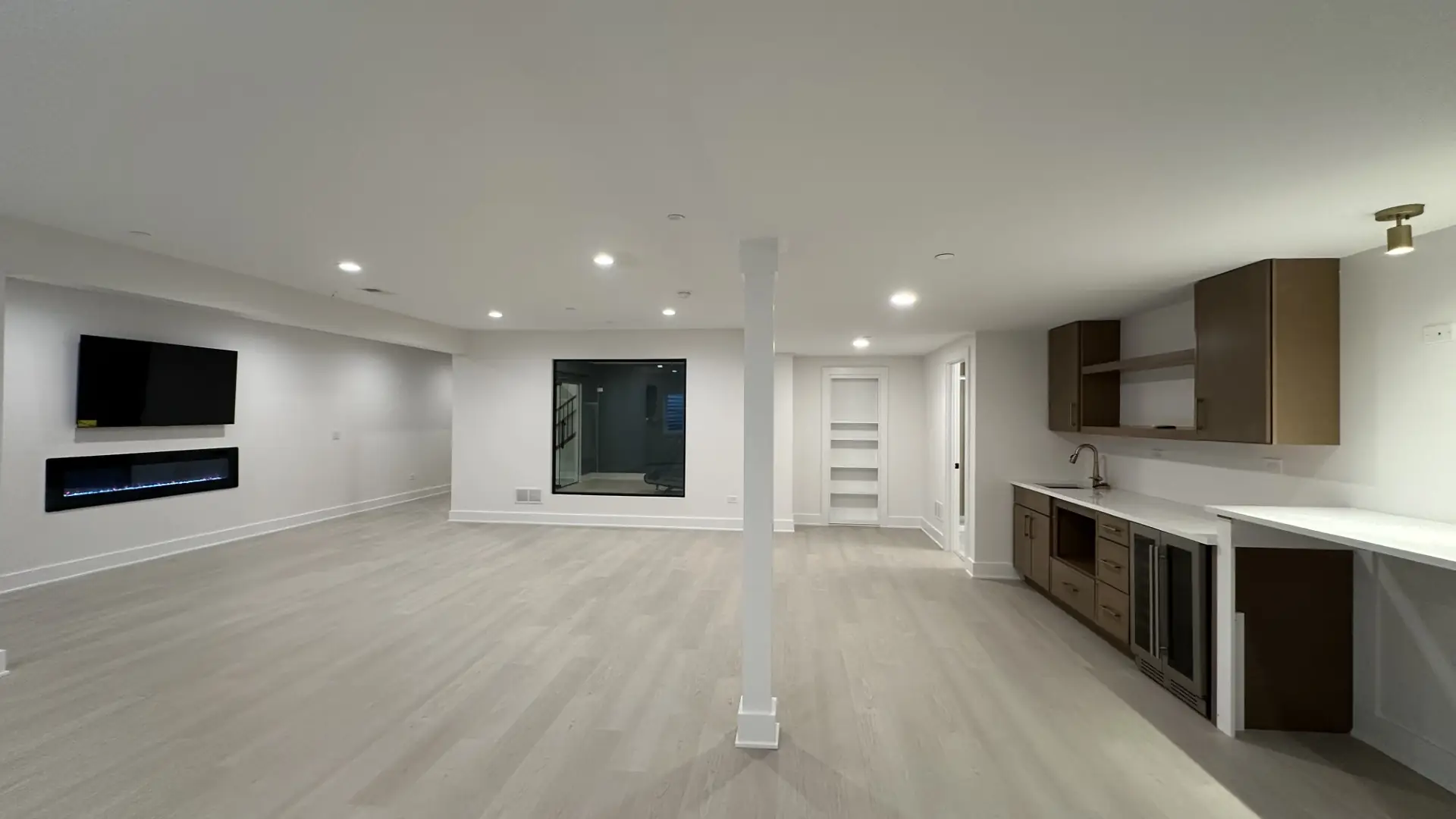
It is the only part of the house where you already own the foundation, the walls and the roof. Everything else you build has to pay for all three.
You already paid for the square footage
An addition means excavation, footings, foundation, framing, roof, siding and a connection to the existing house. A basement needs none of that. The shell exists.
That is why finished basement space typically costs a third to a half of what the equivalent addition costs, and why the comparison is rarely close for a family that just needs another room.
- No excavation, foundation or roof.
- No lot coverage or setback problem, so no zoning fight.
- No exterior match to worry about.
- Often a thousand square feet or more, all at once.
The shell is already built and already paid for. That is the entire argument.
What it does at resale
A mid-range basement finish recovers roughly seventy to seventy-five per cent of its cost at sale, which puts it near the top of the list for home improvements. In competitive suburban markets it also changes which buyers consider the house at all.
The finishes matter less here than the fundamentals. A dry, warm, properly permitted basement with a legal egress window appraises. A beautiful one without those does not, and may cost you at inspection.
What the space can actually become
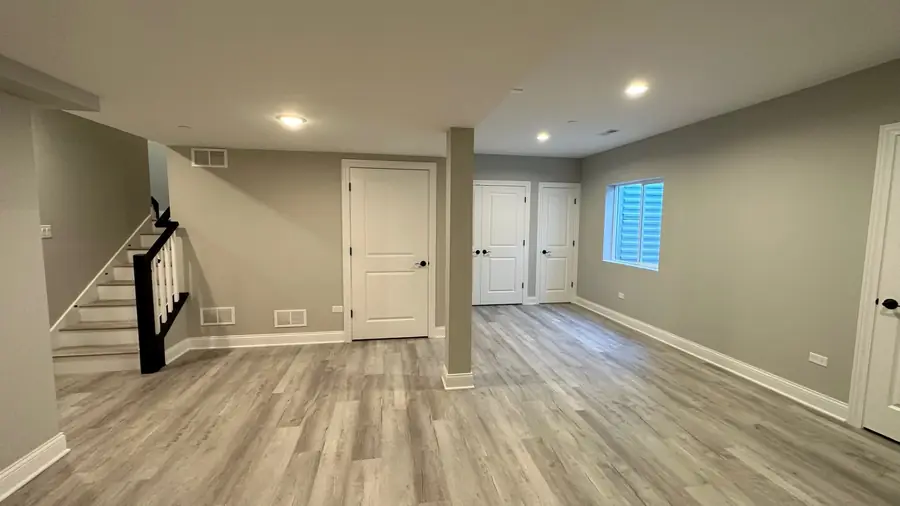
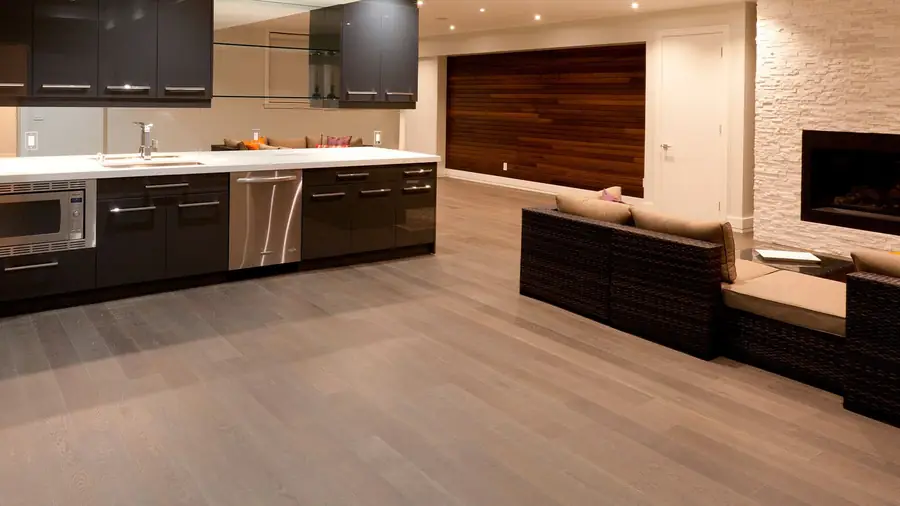
Most of the basements we finish end up doing two jobs: a main family or media space, plus one dedicated room. The dedicated room is what people remember afterwards.
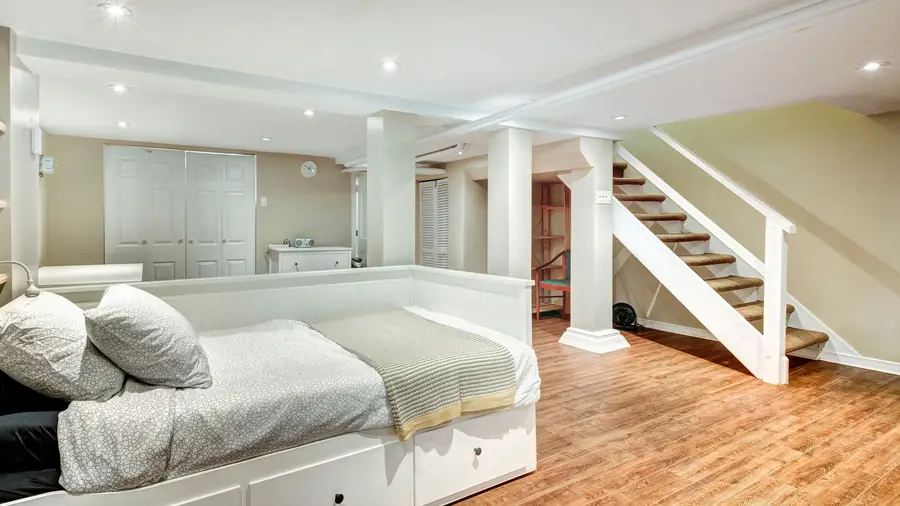
A guest suite with a real bathroom. An office with a door that closes. A gym with a floor that takes weight and air that moves. Each of those changes how the household works in a way that another sofa does not.
When not to do it
If the ceiling height is under seven feet, if there is unresolved water, or if the furnace and panel are already at capacity, the basement is not the cheap option any more. It is an addition with a worse ceiling.
We will tell you that on the first visit. It is a twenty-minute check and it saves people from the worst version of this project.
Permit it properly
Every village we work in permits basement finishing, and the inspections cover egress, ceiling height, smoke and carbon monoxide detection, and electrical. None of it is onerous.
An unpermitted finish surfaces at resale, when an appraiser will not count the square footage and a buyer's inspector will find the work. The permit costs a fraction of what that conversation costs.